How do you plan a day on the Alsace Wine Route, and which villages are worth the stop?
Updated on
In brief
- The Alsace Wine Route (Route des Vins d'Alsace) runs for about 170 km along the foothills of the Vosges mountains, from Marlenheim in the north to Thann in the south.
- The Alsace Wine Route opened in 1953 and passes through 60 to 70 wine villages, depending on the official tourism source.
- Alsace grows 7 main grape varieties: Sylvaner, Pinot Blanc, Riesling, Muscat, Pinot Gris, Gewurztraminer and Pinot Noir.
- Alsace has 51 Grand Cru appellations, named hillside vineyards classified between 1975 and 2007.
- The Véloroute du Vignoble d'Alsace, a 131 km bike route, follows the same vineyards from Marlenheim to Thann.
Why the Alsace Wine Route is worth your time
The Alsace Wine Route is a signposted road of about 170 km that links the wine villages between Marlenheim, west of Strasbourg, and Thann, west of Mulhouse. The Alsace Wine Route packs walled villages, half-timbered houses, castle ruins and family wine estates into a strip of hillside only a few kilometers wide, so the next village is usually a short drive away.
The Alsace Wine Route is not one sight but a string of them. You cannot see all of it well in one day, and you do not need to. Most visitors pick one stretch, usually the villages around Colmar, where the Grand Cru hillsides sit closest together.
Alsace labels most wines by grape, so tastings are easy to follow. Pinot Noir is the only red. The Grand Cru names on labels, such as Schoenenbourg or Rangen, are the hillsides you drive past.
The best villages on the Alsace Wine Route, north to south
The best villages on the Alsace Wine Route, in road order from north to south, start near Strasbourg and end near Mulhouse. Each village gets one sentence, so you can choose your stretch before you leave. The busiest and most visited cluster sits between Ribeauville and Eguisheim.
- Marlenheim is the northern start of the Alsace Wine Route, below the Steinklotz Grand Cru, and the closest wine village to Strasbourg.
- Obernai is the main town of the northern stretch, with a TER train station about 500 m from the center and trains to Strasbourg in about 30 minutes.
- Andlau sits in a narrow valley with three Grand Crus: Kastelberg, Wiebelsberg and Moenchberg.
- Dambach-la-Ville keeps three fortified gates from its town walls and grows the Frankstein Grand Cru on four granite hillsides.
- Bergheim, voted Village Préféré des Français in 2022, is a walled village a few kilometers from Haut-Koenigsbourg Castle.
- Ribeauville sits below three castle ruins and grows the Osterberg Grand Cru.
- Riquewihr, home of the Dopff & Irion estate, keeps its town walls and the Dolder tower, built in 1291, below the Schoenenbourg Grand Cru. See Riquewihr.
- Kaysersberg, voted Village Préféré des Français in 2017, is the birthplace of Albert Schweitzer and home of Domaine Weinbach. See Kaysersberg.
- Colmar, known as the capital of Alsace wines, sits at the middle of the route and is the easiest base for the southern half. See things to do in Colmar.
- Eguisheim, voted Village Préféré des Français in 2013, is built in rings around its castle, with the Eichberg Grand Cru above it. See Eguisheim.
- Guebwiller is the only commune in Alsace with four Grand Crus: Kessler, Kitterlé, Saering and Spiegel.
- Thann marks the southern end of the Alsace Wine Route, below the steep, volcanic Rangen Grand Cru.
Self-drive, bike, bus, group tour or private driver: how should you do the Alsace Wine Route?
The best way to do the Alsace Wine Route depends on who wants to taste. In France, the legal limit for drivers is 0.5 g of alcohol per liter of blood, and 0.2 g on a probationary license, so a self-drive day needs one person who stays sober. Every other option lets everyone taste.
| Option | How it works | Good to know | Best for |
|---|---|---|---|
| Self-drive | Rental car with a designated driver, following the Route des Vins signs | Village parking fills fast on summer weekends and in December; arrive early | Groups with one non-drinker |
| Bike | The Véloroute du Vignoble d'Alsace, 131 km from Marlenheim to Thann | Some steep climbs between villages; an e-bike helps | Active travelers with 2 or 3 days |
| Bus and shuttle | TER train to Colmar, then the Kutzig shuttle or the line 106 bus to the villages | Kutzig runs April 3 to October 11, 2026, not every day | Independent travelers based in Colmar |
| Shared tour | Minibus on a fixed route, tastings usually included | Often about 4 hours from Colmar, priced per person | Solo travelers and couples on a budget |
| Private driver | Your own van, your own villages, hotel pick-up | Priced per van, not per person; tastings extra | Groups of up to 7 who all want to taste |
FJ13 is not the best choice for a couple on a tight budget staying in Colmar: the Kutzig shuttle or a shared minibus tour costs less. For booking tastings and comparing wine tours, see Alsace wine tours.
When is the best time to drive the Alsace Wine Route?
The best time to drive the Alsace Wine Route is from May to October, when the vines are green, the villages are full of flowers and the Kutzig shuttle runs. Harvest is the most lively season, with tractors in the lanes and grape presses running, but winemakers have less time for visitors and the main villages fill up on weekends.
Harvest dates move with the weather. In 2026, the Crémant d'Alsace harvest started on August 12, the earliest date on record, and picking for still wines runs on into the autumn.
December is a second high season: Riquewihr, Kaysersberg, Eguisheim and Ribeauville hold Christmas markets, so you can pair a tasting with a market. See the village Christmas markets.
Spring is the quiet choice. The vines leaf out, the villages are calmer than in summer, and weekday tastings rarely feel rushed.
The Alsace Wine Route with FJ13 private driver
FJ13 is a private transport company with driver, based in Entzheim next to Strasbourg. On the Alsace Wine Route, your FJ13 driver picks you up at your hotel in Strasbourg or Colmar, drives you from village to village, and waits while you taste. Nobody has to stay sober, and the price is per van, for 1 to 7 passengers.
A suggested north-to-south day from Strasbourg: leave around 10:00, walk the old center of Obernai, continue to Ribeauville, then taste at Dopff & Irion in Riquewihr. Have lunch at La Winstub du Chambard in Kaysersberg and taste at Domaine Weinbach. End in Eguisheim before the drive back. You get self-guided time in each village, and your driver shares local tips along the way.
A similar day is the Alsace Wine Route private day tour. For the hillsides, see the Alsace Grand Cru wine tour. Short on time? Try the Alsace villages half-day tour. On full days, you can add a certified guide-conferencier (optional, extra cost).
Tastings, meals and tips are not included. Pick your villages in the quote configurator to get the price for your van.
Frequently asked questions
Can you drive the whole Alsace Wine Route from Marlenheim to Thann in one day?
You can, but you would see little more than the road. Pick one stretch for a day trip, usually Ribeauville to Eguisheim.
Is the Alsace Wine Route easy to follow without GPS?
Yes. The Alsace Wine Route is signposted along its length with Route des Vins signs. A phone map still helps for parking.
Where does the Alsace Wine Route start if you are coming from Strasbourg?
The Alsace Wine Route starts in Marlenheim, a short drive west of Strasbourg. Many visitors join it a little further south, in Obernai, which is also on the TER line from Strasbourg.
Do you need an e-bike to cycle the Alsace Wine Route?
Not if you are fit, but it helps. The Véloroute du Vignoble d'Alsace mixes bike paths and quiet roads, with short steep climbs between villages. On a regular bike, plan 2 to 3 days for the full 131 km.
Which grape should a first-timer taste on the Alsace Wine Route?
Start with a dry Riesling, then a Pinot Gris and a Gewurztraminer to see how different they are. Taste from dry to rich, and ask for a Crémant d.Alsace to finish.
Is the Alsace Wine Route worth visiting in January or February?
Yes, if you want quiet villages, but expect bare vines. Some tasting rooms keep shorter winter hours, so call ahead.
See also
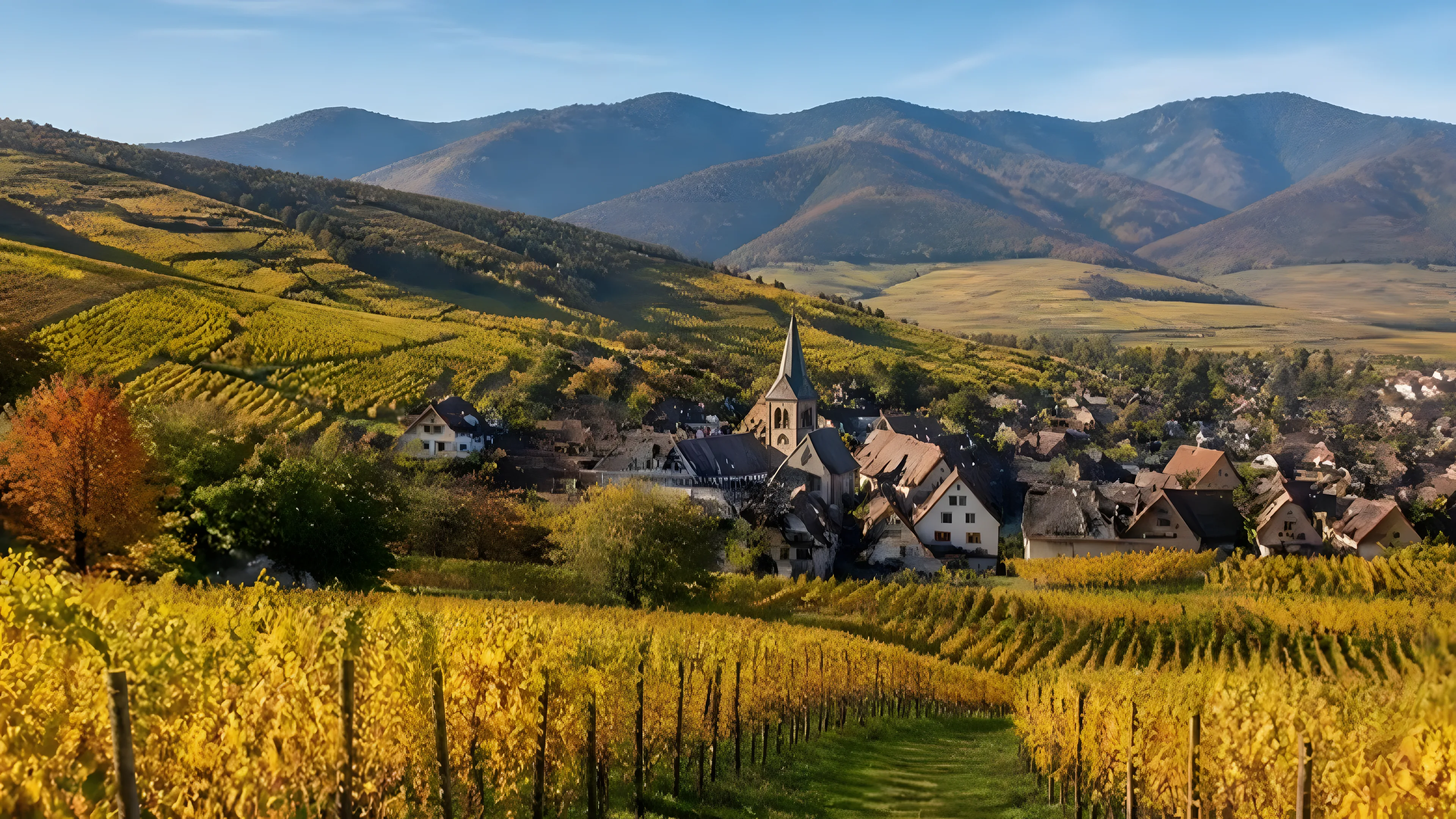
Alsace Wine Route private day tour
A full day through the wine villages from Strasbourg, with tasting stops.
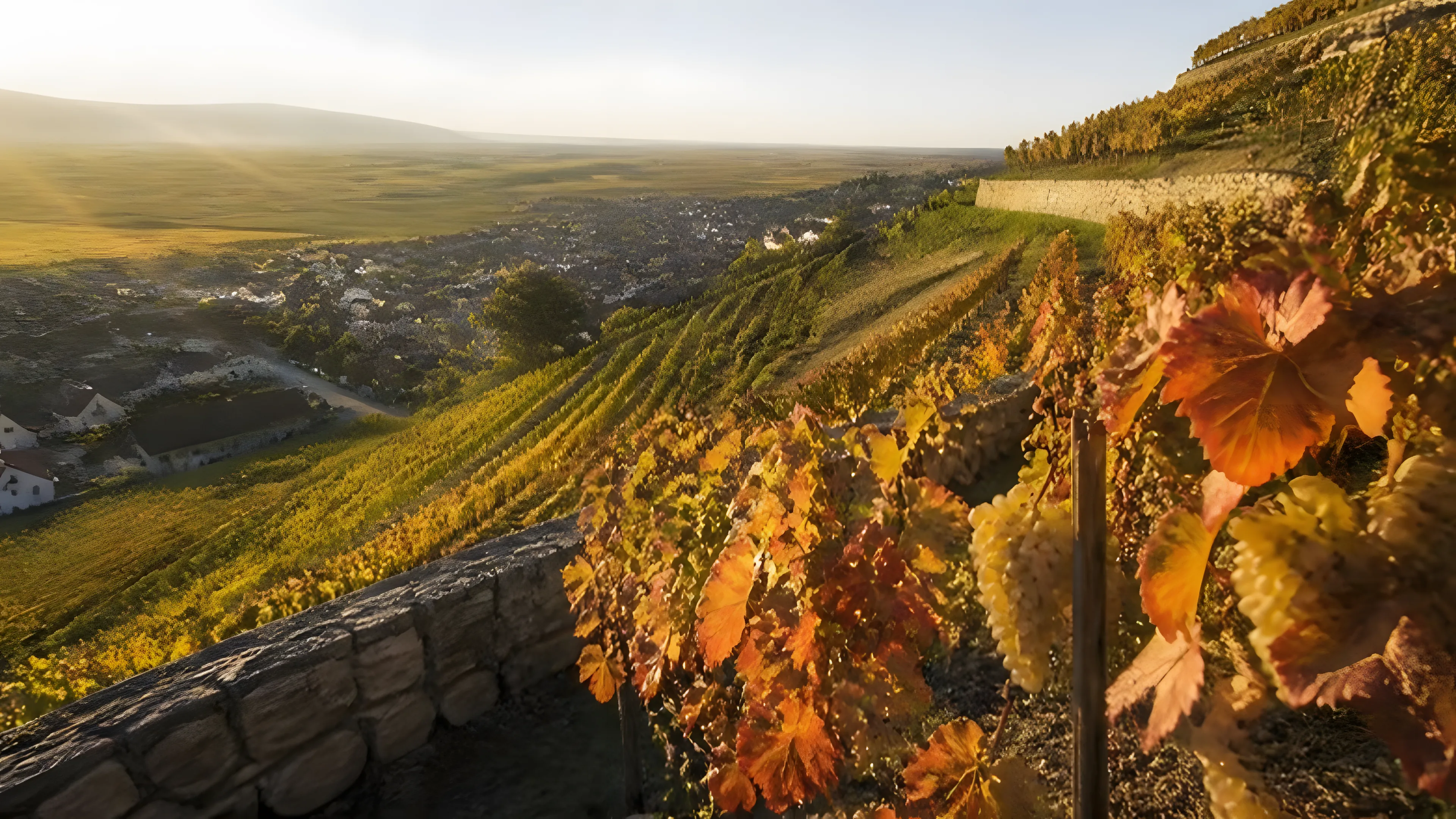
Alsace Grand Cru wine tour
A private day built around the Grand Cru hillsides.
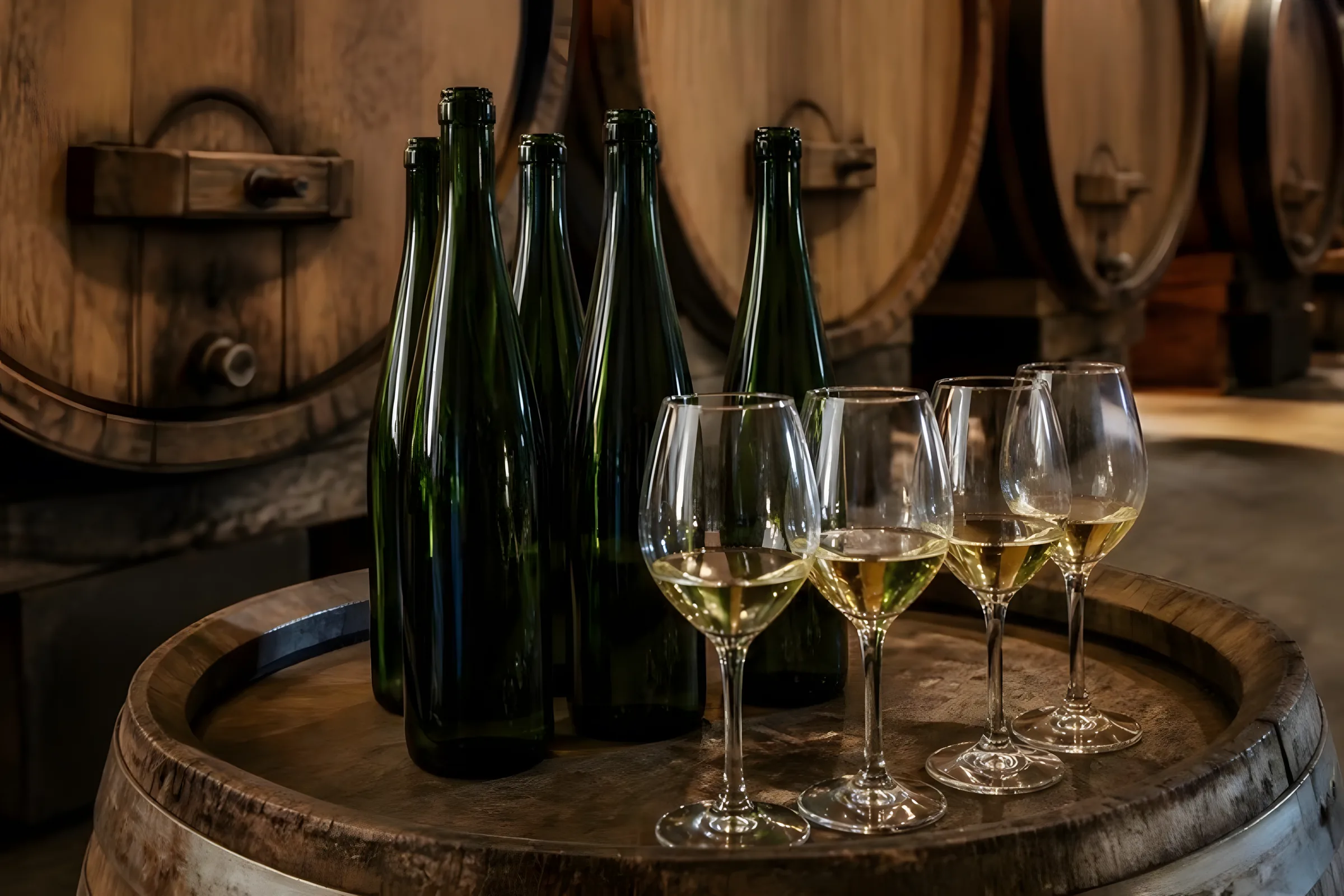
Alsace wine tours
Tastings, etiquette and the main ways to book a wine day.
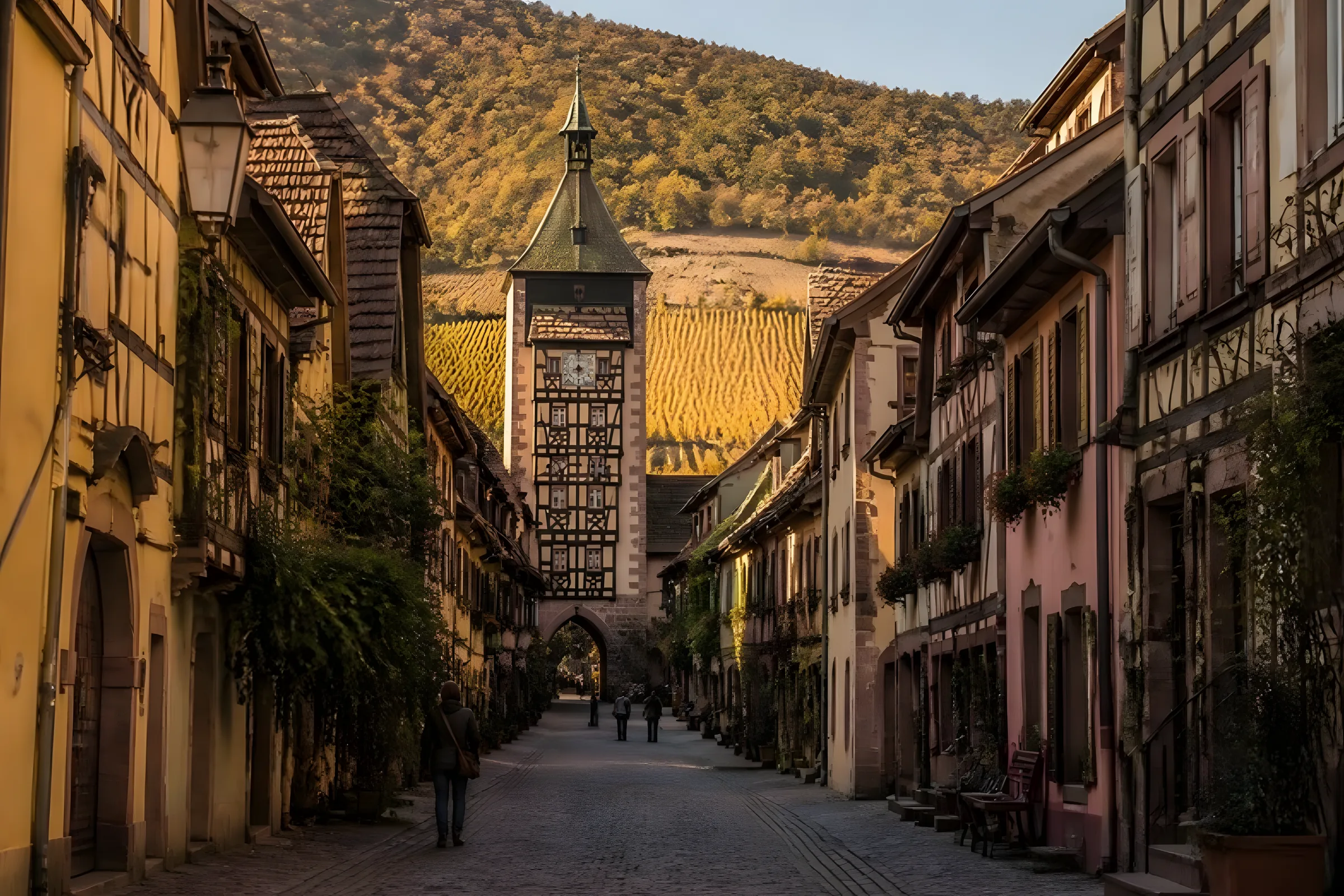
Riquewihr
The walled wine village below the Schoenenbourg Grand Cru.
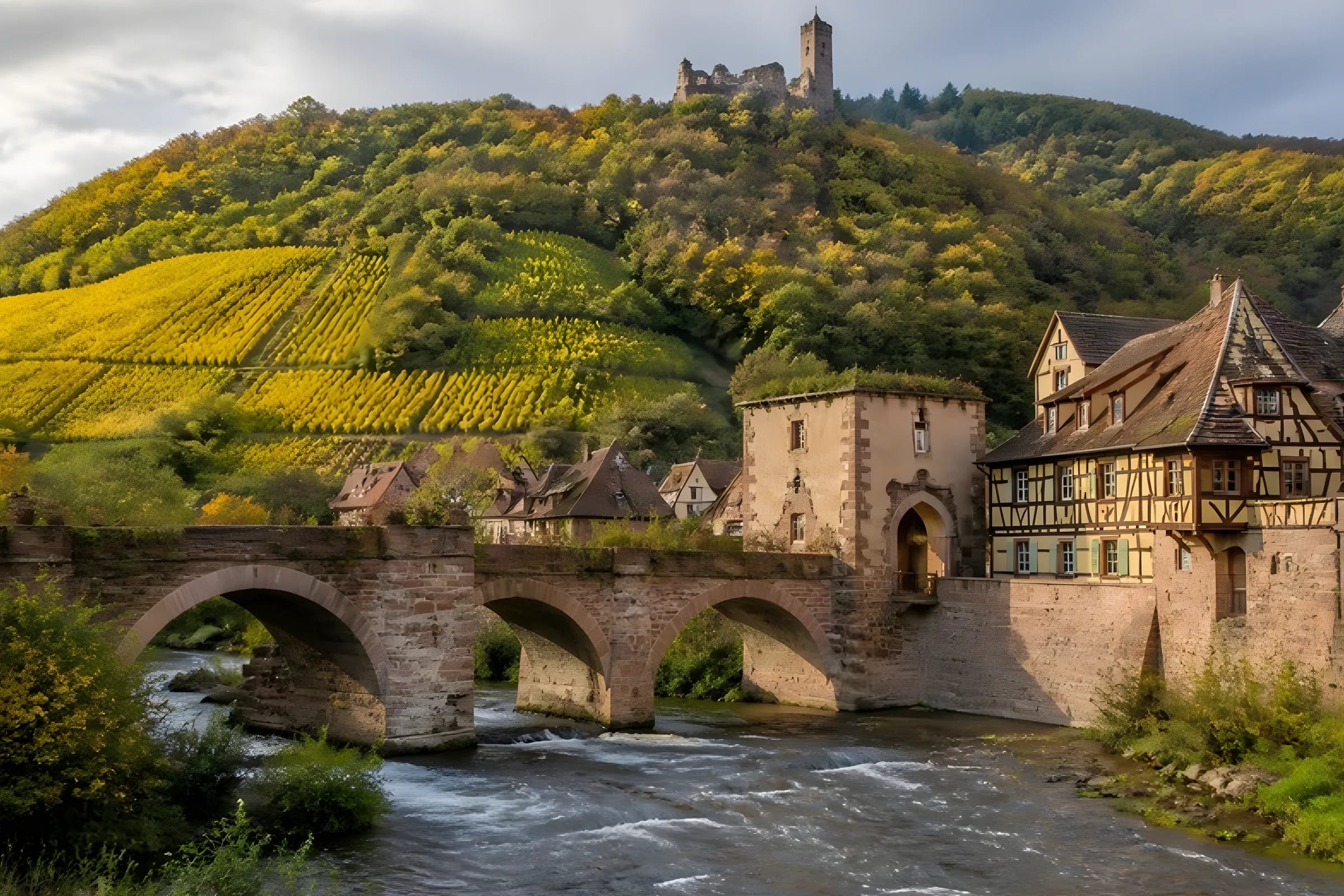
Kaysersberg
Castle, bridge and vineyards at the mouth of the Weiss valley.
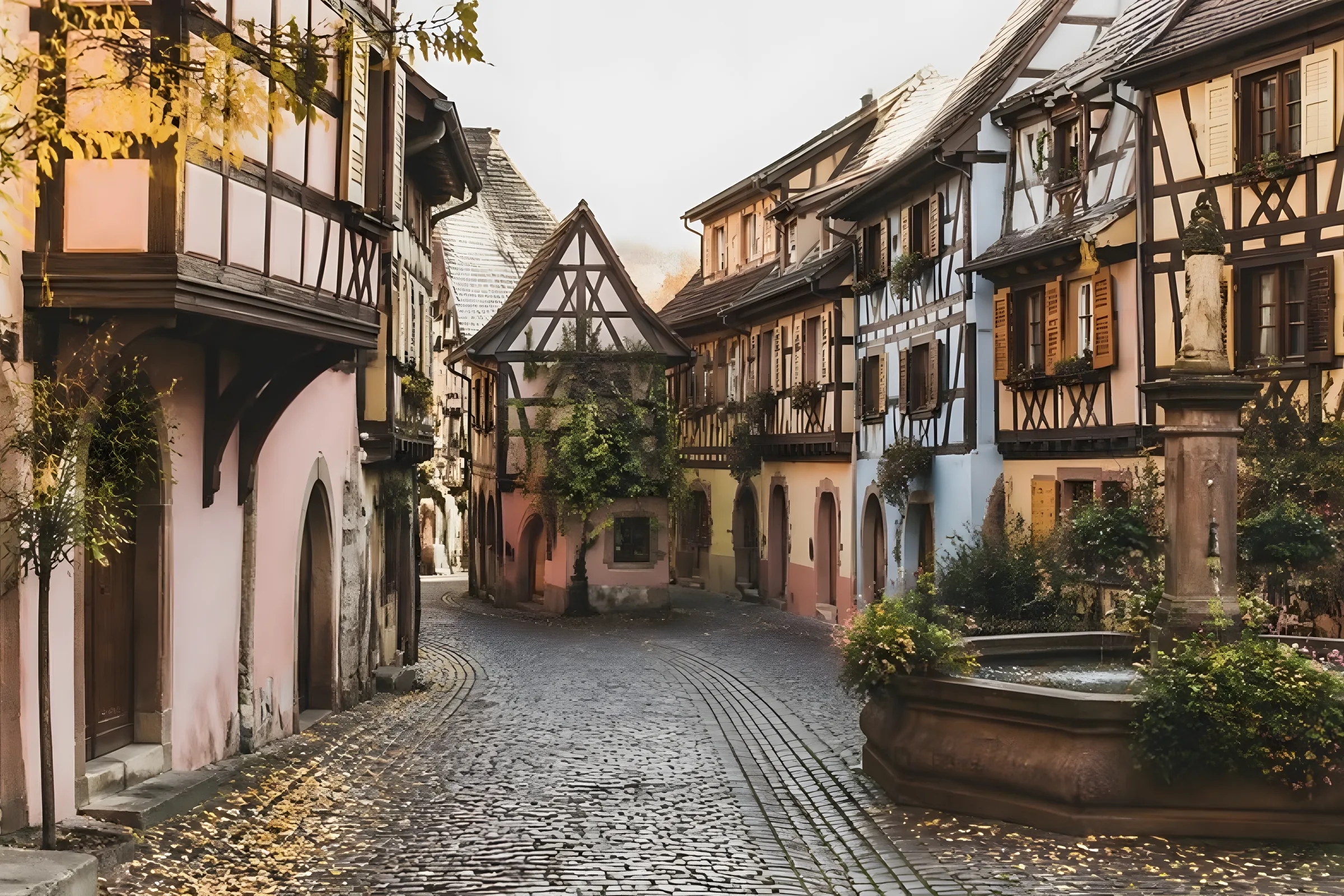
Eguisheim
A round village built in rings around its castle.
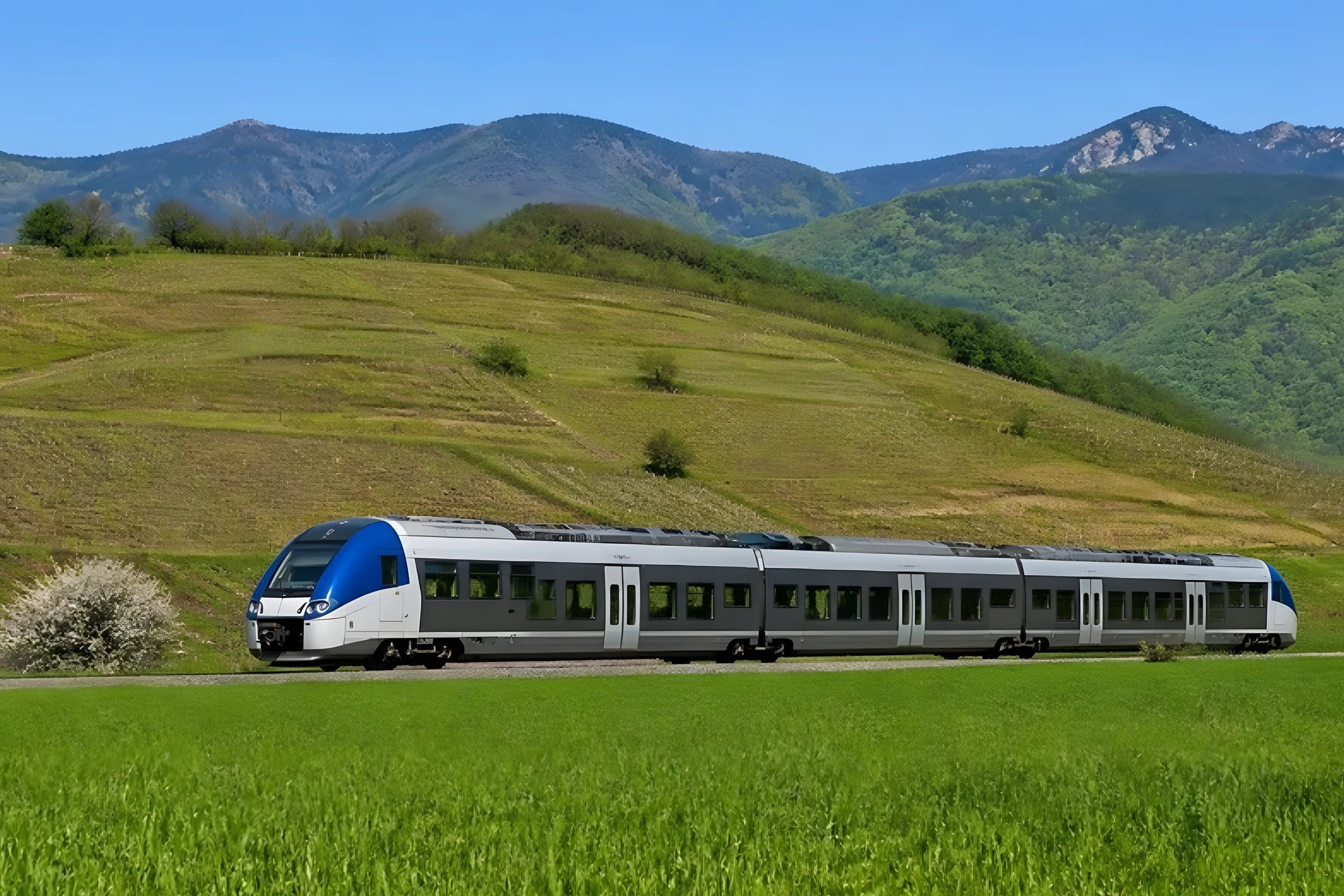
Strasbourg to Colmar
Train, bus, car or private driver: times and trade-offs.
Plan your Wine Route day
Pick your villages and get the price for your van.
Get a quote
Ready to plan your day?
Pick a date and tell us how many you are. You get an instant price per vehicle, with no payment at this stage.